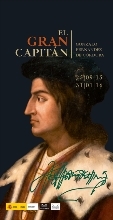
THE GREAT CAPTAIN
From 25/09/2015 to 31/01/2016. Every day
Curator of the exhibition: Colonel D. Jesús Ansón Soro
December 2, 2015 marked the fifth centenary of the death of Gonzalo Fernández de Córdoba, known in Spain and the rest of Europe as the Great Captain. The Army and in particular the Army Museum have organised a series of activities to commemorate this anniversary of such a significant and transcendent character in the history of Spain.
The Royal Board of Trustees of the Army Museum, its collegiate governing body, decided, at its meeting on 25 November 2014, to include a temporary exhibition on this character during 2015. Thus was born the Exhibition "The Great Captain".
The purpose of the exhibition is to introduce visitors and society to a character who played a decisive role in the History of Spain at the service of the Catholic Monarchs. His contributions to the art of war, the fight and victories against the French and Ottoman armies, far superior in numbers and armaments, allowed him to defend the Kingdom of Naples and maintain control of the Mediterranean.
The period in which he lived (1453-1515) was one of the most complex and decisive in the history of Spain, dedicating his life to the service of the Catholic Monarchs, at that time with absolute loyalty and honesty. The beginning of this period of history is marked by the end of the Hundred Years' War, with the appearance of France as a European power, the wars of succession to the Crown of Castile, the conquest of Granada by the Catholic Monarchs and the creation of Spain as one of the first modern states in Europe. The struggles with France in Italy for the defense of the Kingdom of Naples and the confrontation with the Turks to stop the expansion of the Ottoman Empire towards the West would be logical consequences of this situation. The Battle of Albuera (February 24, 1479), in the War of the Castilian Succession, was his baptism of fire in which he already stood out for his bravery and skill with weapons. Later in the War against the Nasrid kingdom he showed his courage and good work, dragging his men into battle in the most difficult moments so he would quickly become one of the outstanding captains of this war. These skills with which he had manifested in combat, added to the chivalric skills in which he had been educated and to which was added a special negotiating skill manifested in the talks for the surrender of Loja and then of Granada, led Ferdinand and Isabella to appoint him leader of the expedition sent to Italy to defend the Kingdom of Naples.