

- Home
- 'Boletín Tierra' Newspaper Reports
- Full article
THE MENORCA MILITARY MUSEUM CONSORTIUM DISSEMINATES ITS WORK THROUGH A NEW ARMY WEBSITE PORTAL.
Thursday, July 30, 2009
Number: 614
Luis Negro / Madrid.
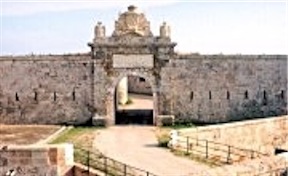
The new portal of the Menorca Military Museum Consortium originates, in the words of the Permanent Commission president, Colonel Riva, with the aim of being an “enquiry and information” instrument for the Island of Menorca’s important historical-military patrimony.
On 22nd June 1998 an agreement was signed between the Balearic Islands Autonomous Community Government and the Ministry of Defence by which the Consortium of the Menorca Military Museum and Mahón Port and Cape San Esteban Historical-Military Patrimony was constituted. By virtue of this agreement, the Ministry of Defence transferred to the Consortium —although while maintaining its ownership—, the use of five outstanding monuments of military architecture which are erected around the port of Mahón (the island’s main city) and which, in addition to appearing in the Inventory Book of European Cultural Patrimony Protection, in our country are considered to be Properties of Cultural Interest.
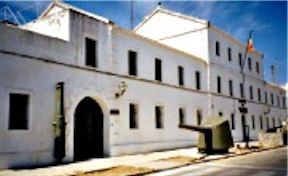
The Military Museum is located in the former
Calacorp Barracks (Photo: Army)
The Military Museum is the initial entity and the origin of the present Consortium. It was created and directed, until 2008, by Colonel Fornals; it is found situated in the outbuildings of the Calacorp Barracks, in the locality of Es Castell, constructed by the English in the second half of the 18th Century, and it is made up of twenty halls that exhibit the various moments in Menorca’s military history, from Prehistory up to our days.
Isabel II Fortress is situated on the La Mola Promontory, to the north of Mahón on its estuary. The Spanish began its construction in 1848, although before Menorca returned to Spanish hands by virtue of the Treaty of Amiens (1802) the English had already constructed two defence towers. It is one of the last fortresses constructed in Spain and its architecture surprises all those who visit it due to its perfection and singularity.
The San Felipe Castle, situated on the port’s south shore, is a fortification that the Spanish constructed in the mid 16th Century and that the English extended once they took possession of the island with the construction of various bastions and moats, thus converting it into the best fortress in Europe in the mid 18th Century.
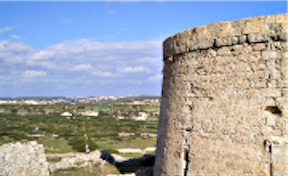
The En Penjat Tower was constructed in 1798
(Photo: Army)
The En Penjat Tower is situated on Turco Hill, near Sant Esteve Cove; in the beginning the tower was called Stuart, in commemoration of the general governor who ordered it to be constructed in 1798. Its present name (which in Minorcan means hanged person) was given to it by the island’s residents because next to the tower stood the gallows where San Felipe Castle’s prisoners were executed.
San Felipe Fort, situated on Lazareto Island, at the entrance to Mahón Port, was built by the English in 1798; its construction follows the three-storey model of the English defensive towers —for depot, troop quarters and combat—.
Thanks to the work which has been undertaken by the Consortium since its creation, these monuments are open to the public year-round at reasonable admission fees, and they include discounts for groups, pensioners and senior citizens. The Consortium’s income is devoted to patrimony conservation and restoration, as well as to history and culture awareness actions, especially those regarding the military.
Along with guided visits, the Consortium carries out cultural actions such as lectures, temporary exhibitions, concerts, publications, etc. Information on timetables and admission fees may be found on the Army website (www.ejercito.mde.es).
ARMY UNITS
- Araba Álava |
- Albacete |
- Alicante |
- Almería |
- Asturias |
- Ávila |
- Badajoz |
- Barcelona |
- Burgos |
- Cáceres |
- Cádiz |
- Cantabria |
- Castellón |
- Ceuta |
- Ciudad Real |
- Córdoba |
- A Coruña |
- Cuenca |
- Girona |
- Granada |
- Guadalajara |
- Gipuzkoa |
- Huelva |
- Huesca |
- Islas Baleares |
- Jaén |
- León |
- Lleida |
- Lugo |
- Madrid |
- Málaga |
- Melilla |
- Murcia |
- Navarra |
- Ourense |
- Palencia |
- Las Palmas |
- Pontevedra |
- La Rioja |
- Salamanca |
- Segovia |
- Sevilla |
- Soria |
- Tarragona |
- Santa Cruz de Tenerife |
- Teruel |
- Toledo |
- Valencia |
- Valladolid |
- Bizkaia |
- Zamora |
- Zaragoza
OUTSTANDING LINKS

Mapa del sitio