-

- Defensive weapons
- Artillery
- Blade Weapons
- Firearm
- Munitions
- Vexillology
- Uniforms
- Insignias
- Sculpture
- Historical photography
- Painting
- Architecture
- Applied arts
- Drawings and engravings
- Documents
- Epigraphy and Philately
- Numismatics
- Etnography
- Texto no traducido
- Maquetas
- Miniatures and Mock-ups
- Instruments and equipment
- Vehicles
- Miscellaneous
DRAWINGS, PRINTS AND ENGRAVINGS
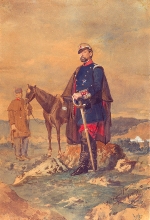
The collections of graphic works primarily portray illustrious figures from Spanish history, such as the series of Portraits of Illustrious Spaniards, which offer a glimpse into their lives. These figures, designed for posterity, are full-length or three-quarter-length portraits, accompanied by symbolic attributes that recall the dignity of the subject and associate them with certain values that the series seeks to highlight. This series was published by the Royal Printing Press of Madrid in 1791.
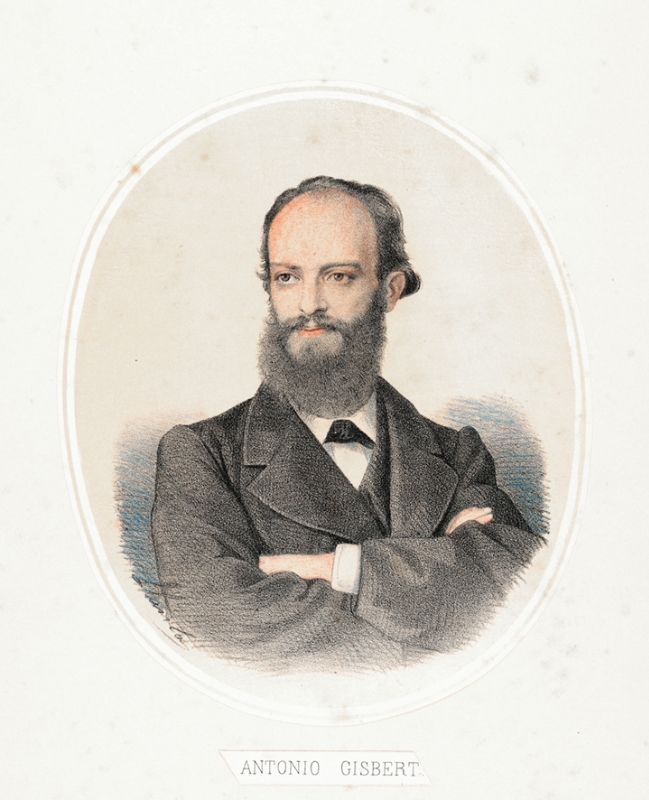
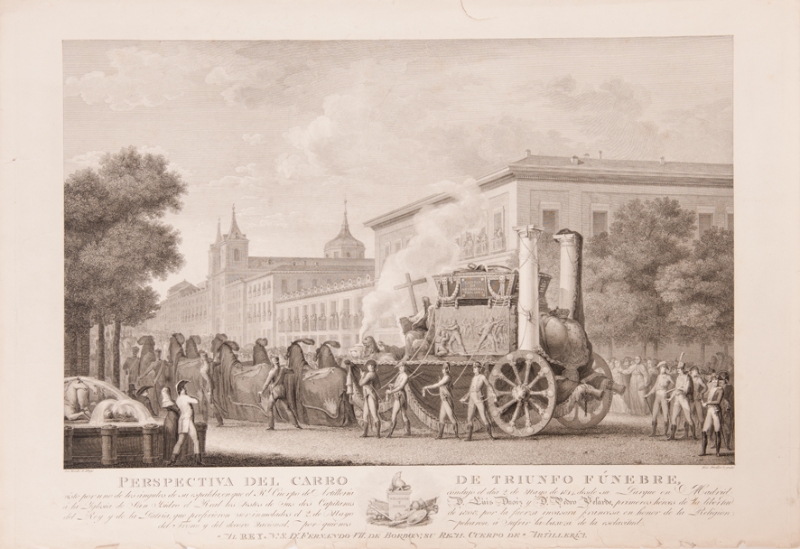
The Museum also houses fine examples of lithographic portraits of renowned figures from the worlds of politics, the military, and culture of the 19th century, such as Juan Prim y Prats, Paul Féval, Pedro Calvo Asensio, and the painter Antonio Gisbert. These portraits exemplify the propagandistic role that lithographic prints acquired from this century onward, largely due to their capacity for reproducing multiple images, which expanded the possibilities offered by earlier printing techniques. The 19th century is also the subject of many of the prints in the collection, such as those depicting the transfer of the remains of Captains Daoiz and Velarde, by the artist José Ribelles y Helip (1778-1835), an example of the Romantic vision of the death of a hero and of popular mourning.
The series of postcards deserves special mention, interesting for their typography and especially for the handwritten information of their recipients, as many of them were put into circulation and retain their original texts and stamps. Of particular note are the series relating to World War I, printed in Berlin and with a distinctly propagandistic character, as well as those linked to the Rif War (1921) and those reproducing the original photographic portraits by Jalón Ángel of high-ranking officers in the Spanish post-war army, such as General Asensio and General Barrón Ortiz.
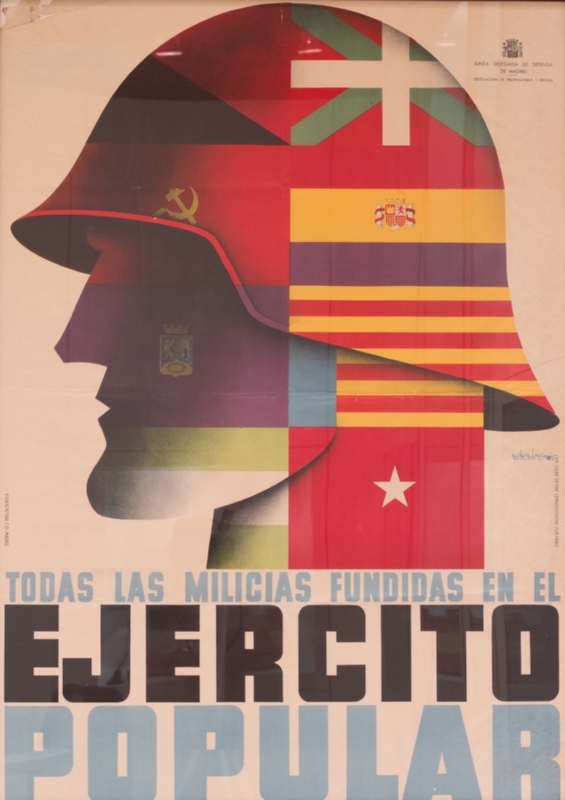
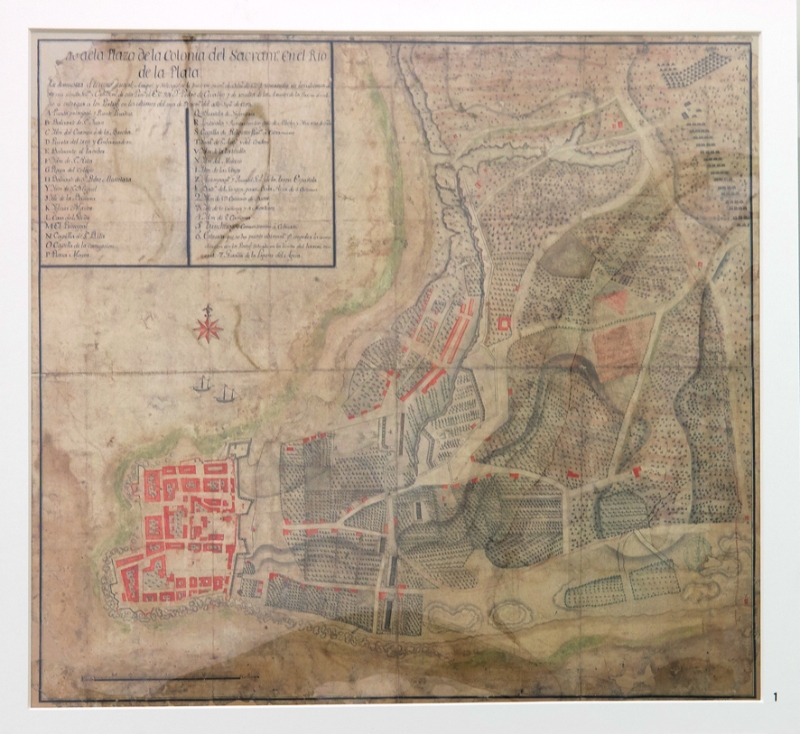
Among the watercolors, the excellent portrait of Colonel Gaminde y Lafont in the context of the Rif War stands out, showcasing the loose and spontaneous brushstrokes characteristic of Mariano Fortuny's (1838-1874) work. Plans will undoubtedly be prominent in the drawing collection; noteworthy is the 1763 piece depicting the settlement of Sacramento on the Río de la Plata. Regarding the poster collection, the one depicting the Alcázar of Toledo after the Spanish Civil War in 1940 and the poster of the Republican army, featuring all the militias merged into the People's Army, by Ruiz Melendreras (1905-1986), are particularly noteworthy.
Images
-
Portrait of painter Antonio Gisbert
 DRAWINGS, PRINTS AND ENGRAVINGS
 -
“All militias merged into Ruiz Melendreras’ popular army”
 DRAWINGS, PRINTS AND ENGRAVINGS
 -
Colonia (colony) de la Plata de Sacramento in Rio de la Plata (Uruguay)
 DRAWINGS, PRINTS AND ENGRAVINGS
 -
“Transfer of the remains of Captains Daoiz and Velarde” by José Rivelles y Helip
 DRAWINGS, PRINTS AND ENGRAVINGS