

MENÚ UNIDAD
UNIDADES DEL EJÉRCITO
- Araba Álava |
- Albacete |
- Alicante |
- Almería |
- Asturias |
- Ávila |
- Badajoz |
- Barcelona |
- Burgos |
- Cáceres |
- Cádiz |
- Cantabria |
- Castellón |
- Ceuta |
- Ciudad Real |
- Córdoba |
- A Coruña |
- Cuenca |
- Girona |
- Granada |
- Guadalajara |
- Gipuzkoa |
- Huelva |
- Huesca |
- Islas Baleares |
- Jaén |
- León |
- Lleida |
- Lugo |
- Madrid |
- Málaga |
- Melilla |
- Murcia |
- Navarra |
- Ourense |
- Palencia |
- Las Palmas |
- Pontevedra |
- La Rioja |
- Salamanca |
- Segovia |
- Sevilla |
- Soria |
- Tarragona |
- Santa Cruz de Tenerife |
- Teruel |
- Toledo |
- Valencia |
- Valladolid |
- Bizkaia |
- Zamora |
- Zaragoza

Museos Militares
Colecciones Museísticas
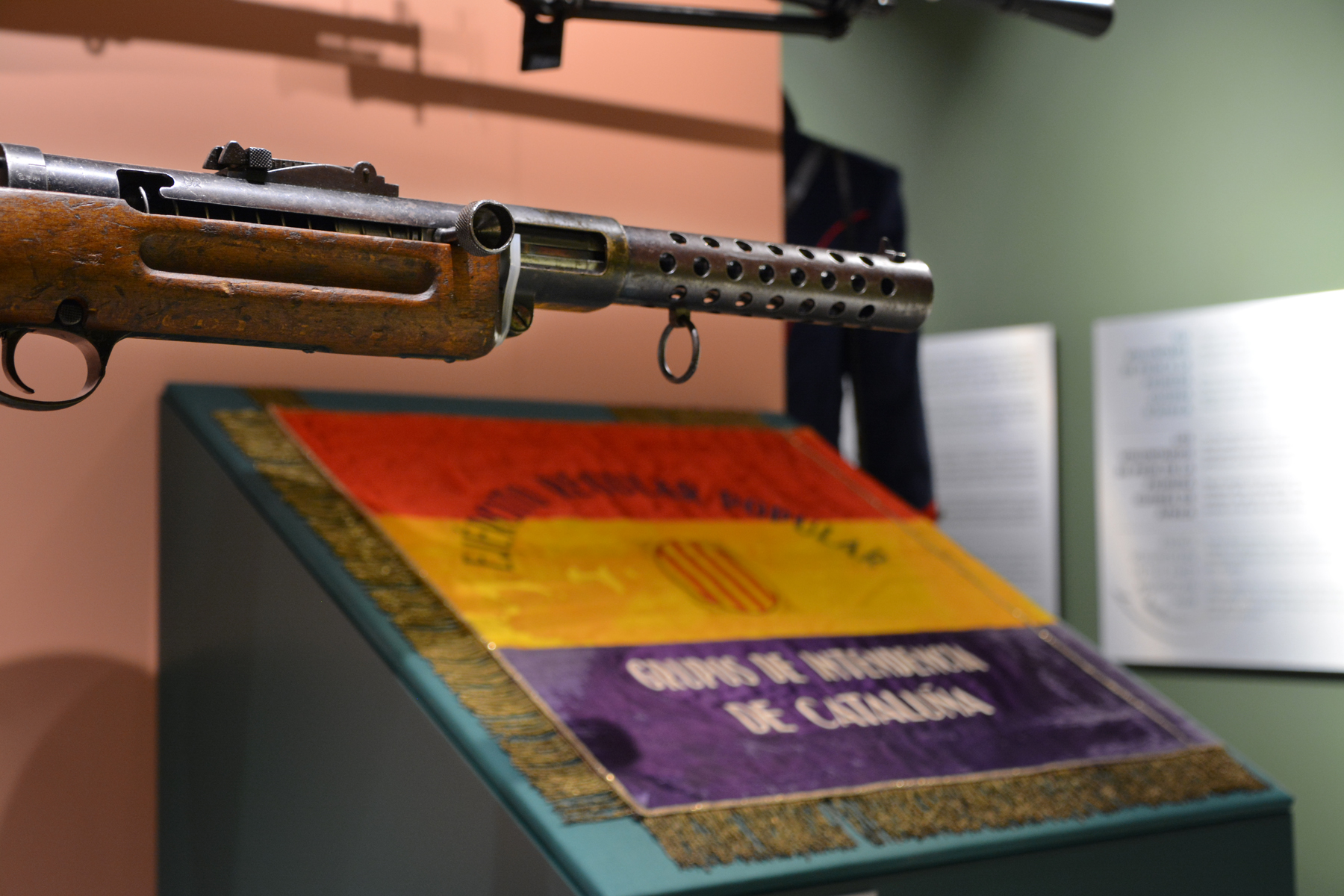
The triumph of the Popular Front in the Spanish elections of 1936 speeded up radicalization of political parties and social unrest. The Republican Government declared a state of alarm; but it did not prevent unease from spreading within some sectors of the Army, a part of which rebelled in July 1936 in Melilla, the Canaries, Andalusia, Castile, Aragón, Asturias and Galicia.
The National Defense Council, the rebels' governance body established in Burgos, declared a state of war in the whole national territory, although the revolt attempts in Catalonia failed. In Barcelona, General Fernández Burriel and General Goded were court-martialed and executed at the Montjuich Castle.
As for the international stage, the Soviet Union decided to support the Republican Government, while Germany approved aid packages to be sent to the rebels. The National Government, headed by General Franco, led the military operations against Madrid. Up to1937, the northeast region of the country had been spared from military actions. In the face of the way events were developing, the Republican Government, who had been established in Valencia, moved to Barcelona.
From the late 1938 through the beginning of 1939 the national army carried out the offensive on Catalonia and entered Barcelona on January 26, 1939, which virtually meant the collapse of the Republican Government.
The last session of the Republic's Parliament took place in the Figueres Castle on February 1, 1939. Manuel Azaña and Lluis Companys, the President of the Generalitat (the autonomous Catalan government), left Spain. On April1, 1939, Franco signed in Burgos the last military communiqué of the Civil War.
Mapa del sitio